
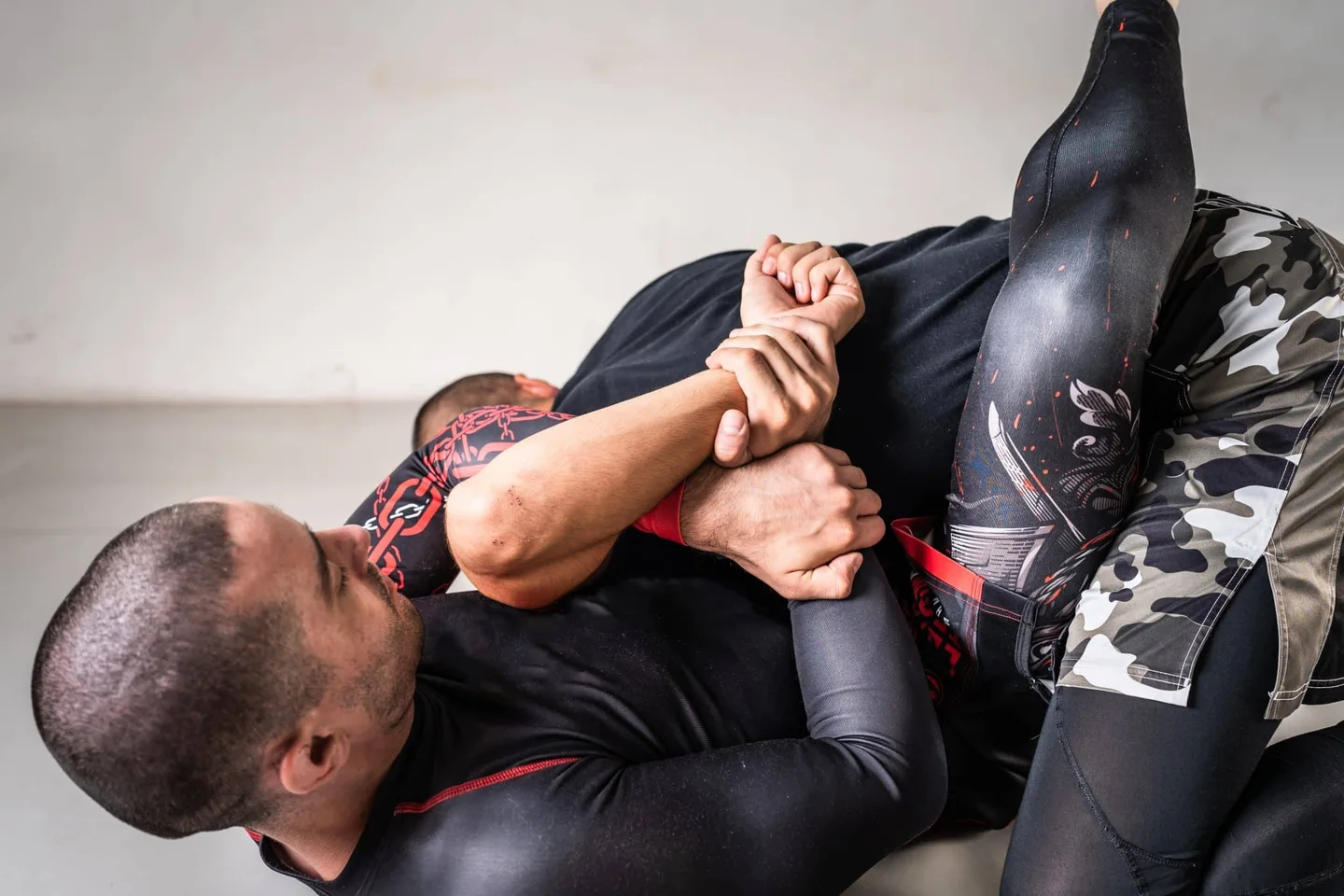
Why Being on the Ground During a Fight Is Dangerous in Self-Defense
Ground fighting, the cornerstone of Brazilian Jiu-Jitsu (BJJ), has proven effective in controlled settings like tournaments and one-on-one sparring sessions. However, in real-world self-defense scenarios, being on the ground can be a severe disadvantage. The realities of street altercations, environmental factors, and the presence of multiple attackers all make ground fighting a risky strategy. Here’s an expanded look at why being on the ground during a fight is dangerous and why Shaolin Quan Fa (少林拳法) prioritizes standing techniques.
1. Vulnerability to Multiple Attackers
In most self-defense scenarios, attackers rarely act alone. If you are on the ground grappling with one individual, you are highly exposed to others who can kick, punch, or strike you with objects.
• BJJ Limitation: While BJJ practitioners are skilled in ground control and submissions, the style’s focus on single-opponent engagement leaves them vulnerable in multi-attacker situations. Once you’re on the ground, you cannot adequately defend against other threats. Path of Martial Arts “The style is very effective against one person, but multiple opponents can overwhelm a BJJ fighter while they focus on grappling one opponent.”
• Shaolin Kung Fu Advantage: Shaolin Wu Ling Xing Quan Fa emphasizes mobility and awareness, teaching practitioners to remain on their feet where they can maneuver, assess threats, and defend against multiple attackers effectively.
In a street fight, mobility and the ability to handle multiple threats are critical, and Shaolin Kung Fu provides the tools to do so without being compromised.
2. Environmental Hazards
The ground is rarely forgiving in real-world settings. Unlike the mats used in training facilities, concrete, asphalt, gravel, or uneven terrain can cause serious injuries. Broken glass, debris, or hard surfaces can amplify the risks of ground engagement.
• Risks of Grappling on the Ground: Attempting submissions or rolls on hard or uneven surfaces can lead to abrasions, broken bones, or concussions. Additionally, an attacker can use the environment to their advantage by slamming your head or body against the ground.
• Shaolin Kung Fu Approach: Shaolin Wu Ling Xing Quan Fa trains practitioners to remain standing or transition quickly back to a standing position. Strikes, throws, and grappling techniques (shuai jiao) are designed to neutralize threats while minimizing contact with hazardous surfaces.
Being aware of and avoiding environmental hazards is a key component of self-defense, and Shaolin Kung Fu prioritizes safety in its techniques.
3. Limited Mobility on the Ground
Once you’re on the ground, your ability to move and reposition is severely restricted. In situations where attackers are armed or reinforcements arrive, being stuck on the ground is a disadvantage.
• BJJ’s Focus on Ground Control: BJJ practitioners excel at controlling opponents on the ground but are limited in their ability to disengage and reposition. This lack of mobility is problematic in scenarios where escape or rapid movement is necessary. Best Martial Arts for Smaller and Weaker People” by Martial Arts Journey with Rokas, ft. Amber Staklinski: (It’s good to know how to protect yourself on the ground, but it’s best to avoid getting there in the first place)
• Kung Fu’s Emphasis on Mobility: Shaolin Kung Fu teaches dynamic footwork and movement, allowing practitioners to stay agile and adapt to changing circumstances. This mobility ensures that you can evade threats, reposition strategically, and avoid being pinned or cornered.
Mobility is one of the most important aspects of self-defense, and remaining on the ground significantly reduces your options.
Unlock Your Inner Warrior with the Shaolin Arts Warrior Kung Fu Program
Take your self-defense skills to the next level with Shaolin Arts’ Warrior Kung Fu Program, featuring the comprehensive Shaolin Wu Ling Xing Quan Fa style. Master the art of Kicking, Striking, Throwing, and Grappling while building confidence, discipline, and strength.
4. Exposure to Dangerous Strikes
On the ground, you are at a significant disadvantage against a standing opponent who can deliver powerful stomps or kicks. The leverage and force generated from a standing position can easily overwhelm someone on the ground, even if they are skilled in grappling.
• Standing Attacker Advantage: A standing attacker has access to full-force strikes, which can cause severe injuries, especially to the head, ribs, and extremities. Even if you attempt to defend against these strikes, the positioning inherently favors the standing attacker. See “The DEFINITIVE Martial Arts Ranking List” by Combat Self Defense:(BJJ fighters may put themselves in bad positions)
• Shaolin Kung Fu’s Standing Defense: By teaching practitioners to stay on their feet, Shaolin Wu Ling Xing Quan Fa minimizes the risks of being overwhelmed by a standing attacker. Defensive techniques like low sweeps, parries, and quick counters help neutralize threats while keeping you in control.
Avoiding the ground ensures that you can protect vital areas and respond to attacks effectively.
5. Difficulty Escaping and Disengaging
The primary goal of self-defense is to neutralize the threat and escape safely. Grappling on the ground often prolongs the encounter, tying you to a single attacker and making it harder to disengage and flee.
• Prolonged Engagement in BJJ: BJJ’s focus on submissions like arm bars and chokes requires time and precision, which can delay your ability to end the conflict and escape. This increases your exposure to other dangers.
• Shaolin Kung Fu’s Quick Resolution Techniques: Shaolin Kung Fu prioritizes techniques that neutralize threats swiftly, such as disabling strikes, joint locks, and throws. This approach creates opportunities to escape while minimizing the time spent engaged with an attacker.
Escaping quickly is crucial in self-defense, and Shaolin Kung Fu’s emphasis on efficiency supports this goal.
6. Danger from Armed Opponents
Being on the ground is particularly dangerous if your attacker is armed. A knife, bat, or other weapon is far more lethal when the attacker has a positional advantage.
• BJJ’s Limited Weapon Defense: Grappling with an armed attacker increases the risk of being injured, as you are within their striking range with limited ability to neutralize the weapon effectively. Warrior Combat, “A major flaw in Brazilian Jiu Jitsu for self-defense is that it does not incorporate training for weapons, despite the fact that weapons are often present in street encounters.”
• Kung Fu’s Versatility Against Weapons: Shaolin Wu Ling Xing Quan Fa includes weapon defense techniques that focus on maintaining distance, disarming the attacker, and neutralizing the threat while remaining mobile. These strategies significantly reduce the risks associated with armed confrontations.
Staying off the ground allows you to control the distance and defend yourself more effectively against weapons.
7. Lack of Situational Awareness
When you’re on the ground, your line of sight is restricted, making it difficult to assess your surroundings. This lack of awareness can be catastrophic in self-defense situations, as you may not see additional attackers, hazards, or escape routes.
• Ground Fighting’s Blind Spots: Grappling positions often limit your ability to observe what’s happening around you, leaving you vulnerable to unseen threats.
• Kung Fu’s Standing Awareness: Shaolin Kung Fu emphasizes situational awareness and continuous scanning of the environment. Practitioners are trained to remain alert and adapt to new developments, ensuring they are never caught off guard.
Maintaining a clear view of your surroundings is essential in self-defense, and staying on your feet supports this objective.
Shaolin Kung Fu’s Approach to Avoiding the Ground
Shaolin Wu Ling Xing Quan Fa’s comprehensive approach ensures that practitioners are trained to stay off the ground whenever possible. The style incorporates striking, grappling, and throwing techniques that allow for quick takedowns and immediate transitions back to a standing position. This adaptability ensures that you can handle a wide variety of threats while minimizing the risks associated with ground fighting.
By emphasizing mobility, environmental awareness, and efficient techniques, Shaolin Kung Fu provides a safer and more practical system for real-world self-defense than the ground-centric approach of BJJ.
Conclusion
While BJJ is an effective martial art in controlled scenarios, the dangers of ground fighting in real-world self-defense are significant. Shaolin Wu Ling Xing Quan Fa avoids these risks by focusing on standing techniques, mobility, and versatility. This makes it a superior choice for anyone seeking a practical, comprehensive, and effective self-defense system.