Understand the practice
A form gives you movements to practice. Instruction connects those movements to how bodies move and how a technique functions. You learn to ask what makes an action effective, rather than simply copying its outward shape.
Begin traditional martial arts in Peoria with experienced instructors and a clear progression. Learn what the movements mean, how the principles connect, and how to build your practice—whether you are new to martial arts or continuing your training.
Try Your First Class FreeExperience our approach for yourself. Your first class is free, with no obligation.
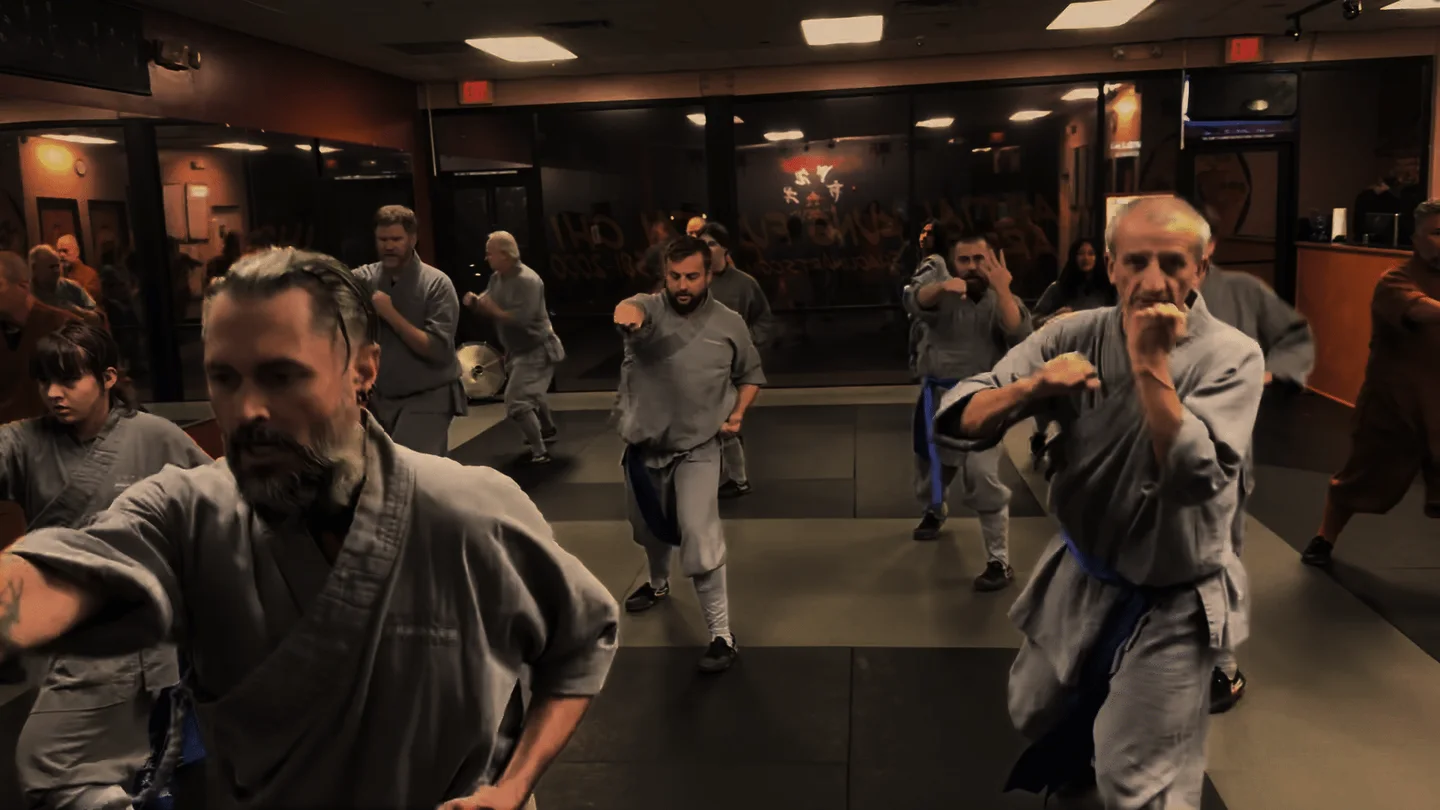
Kung Fu and Tai Chi combine physical practice with learning. You work on movement, explore martial principles, and develop skills through repeated effort.
Choosing a martial arts school means choosing how you want to learn. At Shaolin Arts, the emphasis is on understanding the art: what a movement is doing, why a technique works, and how the principles connect. The physical work has a purpose beyond completing an exercise.
Our Peoria school brings that approach to students across the West Valley. You can begin without previous experience. A structured curriculum provides direction; instruction and regular practice give you the opportunity to develop it.
A form gives you movements to practice. Instruction connects those movements to how bodies move and how a technique functions. You learn to ask what makes an action effective, rather than simply copying its outward shape.
Classes belong to a progressive curriculum. The foundations you learn early remain relevant as training develops. Clear expectations help you understand what to work on and how the next step builds on the last.
A welcoming school can still ask for serious effort. Instructors guide your learning, while training partners give you people to practice with, learn from, and support in return. Progress is personal, but the practice is shared.
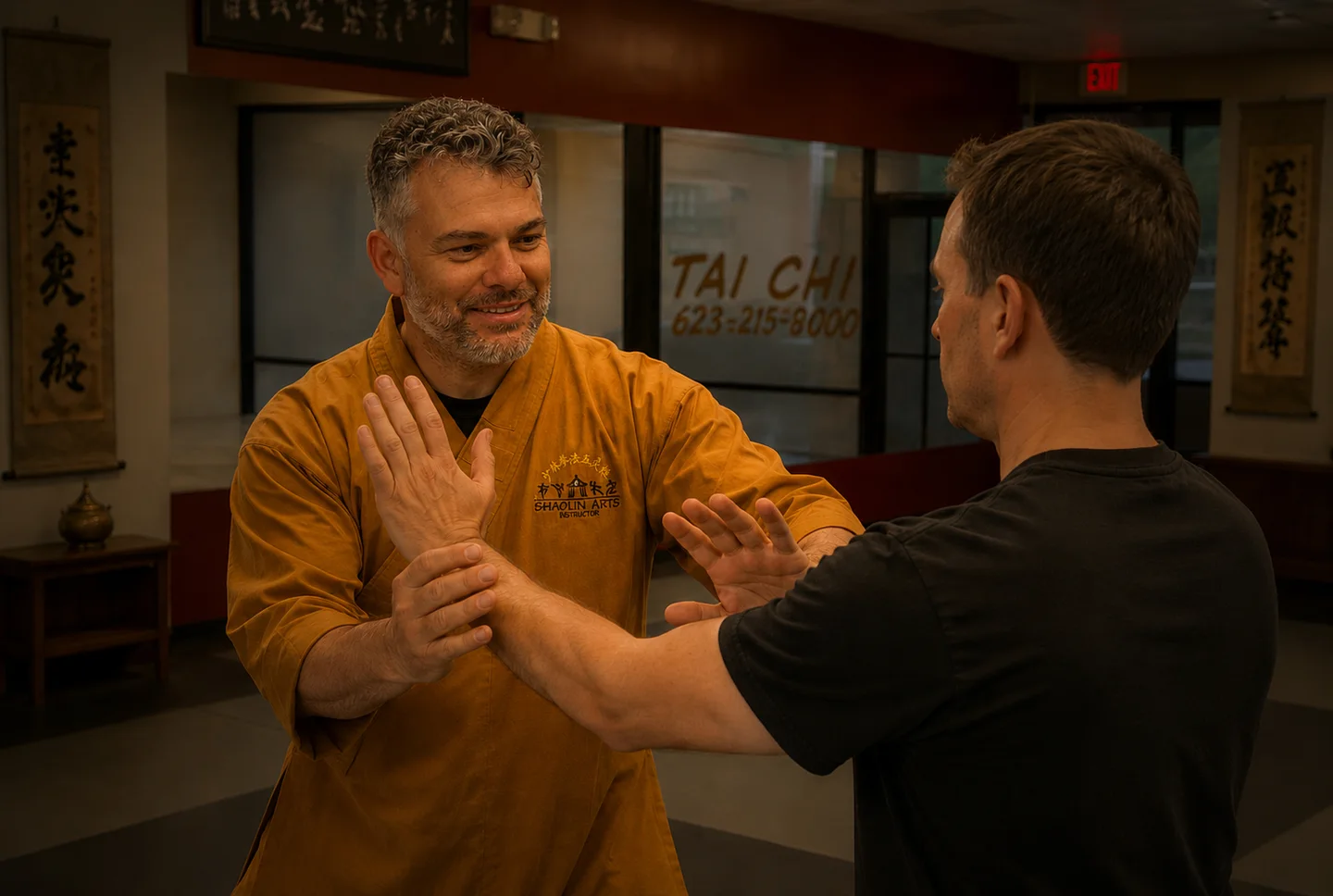
18 years of training, on average.
Our instructors have trained with Master Workman for an average of 18 years and continue studying with him. Sustained study and practice develop knowledge beyond the material needed to earn a rank: how techniques work, why details matter, and how principles apply when the situation changes.
For students, that depth brings purpose to the practice. Instruction connects the movements you are learning with how techniques work and how the principles apply. You have people to ask when something is unclear, and a curriculum that helps you understand what to work on next. Our instructors continue their own learning rather than treating a Black Sash as its endpoint.
Shaolin Arts has taught in Peoria since 1997. The depth of the team supports the serious training and continued development at the heart of the school.
A rank tells you something about a teacher’s progress. It does not, by itself, tell you how long they trained with their teacher, how much of the art they learned, or whether that learning continued after they began teaching.
Over his lifetime studying and teaching martial arts, Master Workman has encountered students who begin teaching—and producing new instructors—before absorbing the depth of their own teacher’s knowledge. When only part of that understanding is passed on, knowledge can become thinner with each generation. The movements may remain while the understanding behind them becomes harder to find.
Someone new to martial arts may not know to ask about that depth. Continued study matters alongside the rank an instructor has earned.
At Shaolin Arts, continued learning is part of the teaching tradition. Our instructors’ sustained training relationship with Master Workman keeps their own development connected to the instruction they give you.
“He and his instructors provide quality teaching and an experience that I have not found anywhere else.”
Will Lahvic
Google review, September 10, 2022 · Excerpt
Read the review on Trustindex →
Classes are parts of a progressive course of learning. What you practice today gives you a foundation for what comes next.
Master Workman’s approach brings curriculum, skills, prerequisites, classes, training methods, and rank together. The curriculum organizes the material; readiness requirements help keep that progression coherent. Regular classes and specific drills give you time to develop the skills. Rank recognizes stages of that work.
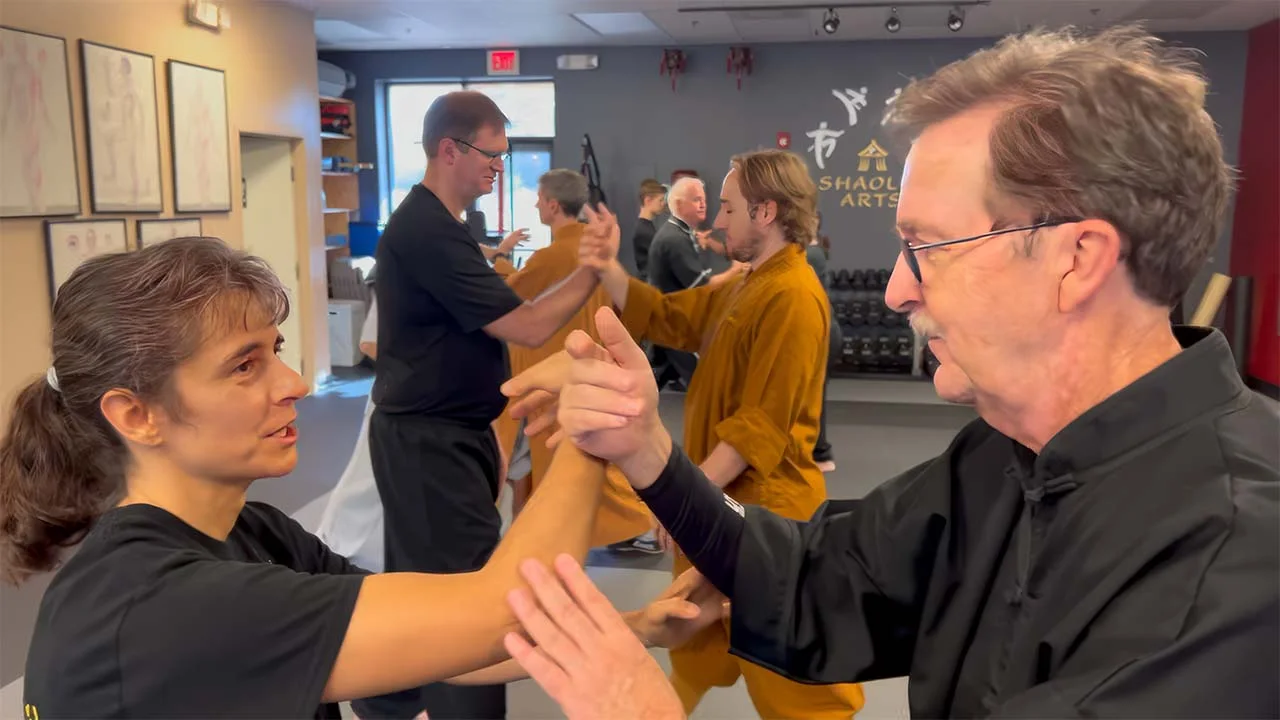
Beginning Kung Fu introduces forms, strikes, kicks, blocks, and stances. As combinations and more advanced material are introduced, you continue refining those foundations. In Tai Chi, you begin with the form, stances, structure, song, and rooting, then develop an understanding of energy and apply the principles through push hands and martial applications.
Learning a movement is a starting point. Repetition, refinement, and application give you different ways to explore it. Drills connect principles with use, so the material becomes something you can work with rather than simply remember.
Our culture is guided by WuDe, the traditional martial virtues. They address both our conduct toward others and the qualities we develop within ourselves.
Martial training brings people into a shared practice. How you treat a partner matters alongside what you are learning. Respect, responsibility, and trust create a basis for working together; patience and perseverance help you stay with the learning process.
Humility · Respect · Morality · Trust · Loyalty
Humility keeps you open to instruction. Respect extends to yourself and the people you train with. Morality asks you to take responsibility for your actions; trust and loyalty concern the relationships you build through them.
These are standards for conduct, not simply words displayed at the school. They shape the way students and instructors work together.
Will · Patience · Perseverance · Persistence · Courage
Will gives your training direction. Patience helps you continue when a movement or principle is not yet clear. Perseverance and persistence mean returning to the work, recognizing mistakes, and making corrections. Courage supports learning through difficulty.
Those qualities develop through practice as well as reflection. They give you a way to approach the challenges of learning the art.
Explore the programs, see what each involves, and choose where you’d like to begin. The Peoria schedule shows the recurring classes; if you are unsure where to start, ask us when you request your free class.
Kung Fu, Chen Tai Chi, Kids Martial Arts, and Personal Coaching.
Find your training →See the recurring Peoria classes and find a starting point.
View the schedule →Your first class is free, with no obligation. Tell us which program interests you. We’ll follow up by phone, email, or text to help you find a starting point at our Peoria school. No previous martial arts experience is needed.
Try Your First Class FreeNo long-term contracts